
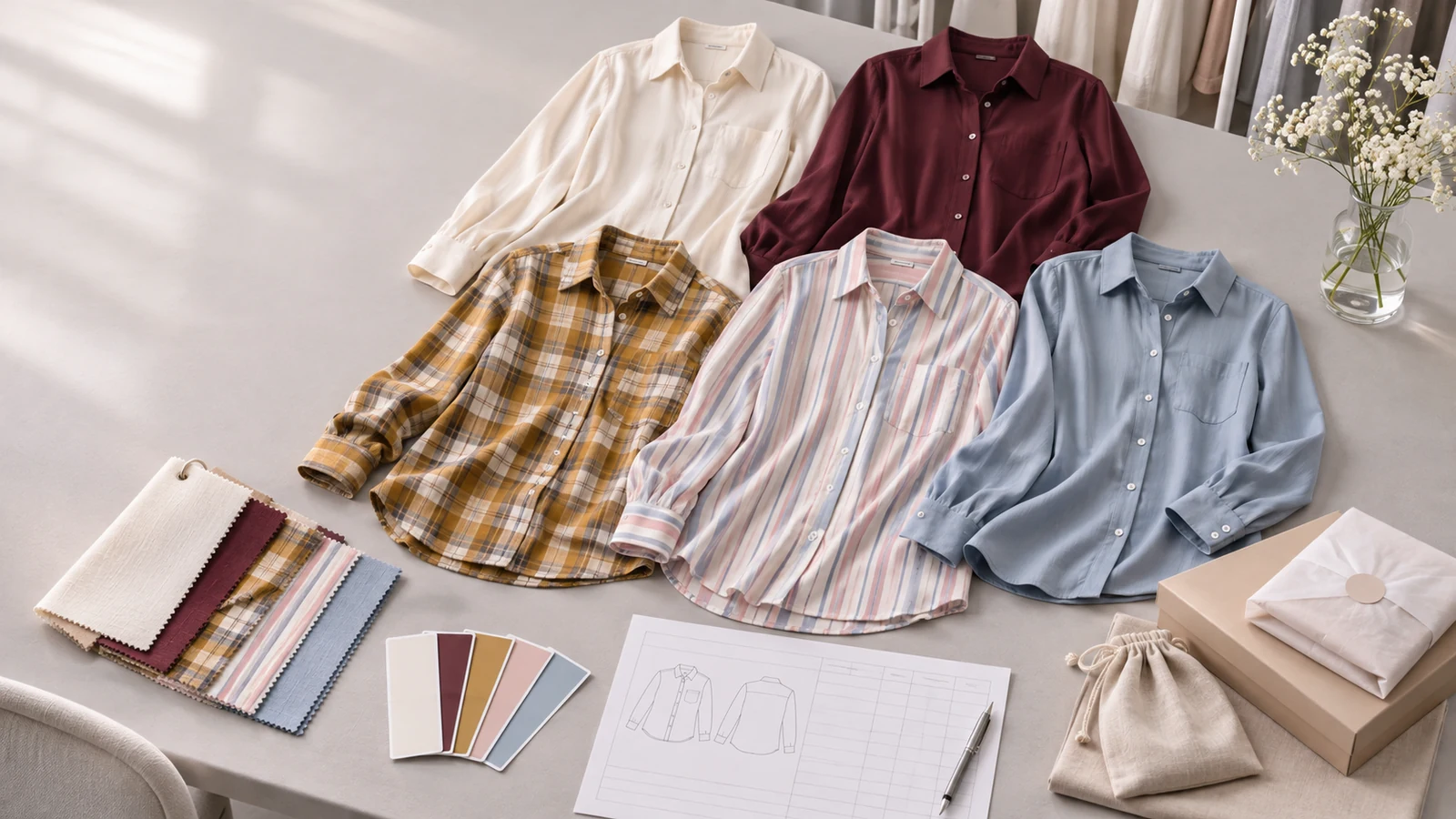
A strong women's shirt capsule is more than several attractive styles placed together. The silhouettes, fabrics, colors, decoration and size strategy need to work as one commercial assortment. Decisions made before sampling determine whether the range is easy to merchandise, efficient to produce and clear to the end customer. This guide outlines the planning steps that help importers, wholesalers and private-label brands build a more coherent brief.
1. Define the Customer and Sales Channel
Start with the buyer, use occasion and retail environment. A boutique capsule can carry stronger decoration and smaller visual stories, while a distributor may prioritize repeatable fits and color continuity. Record the target season, climate, customer age range, expected retail position and whether the shirts will be sold individually or as part of a coordinated collection.
2. Build an Assortment Architecture
Give each style a role. A practical five-style capsule might include a clean core shirt, a plaid or stripe, a textured solid, an embroidered statement piece and a lightweight layering option. This prevents every item from competing for the same customer need.
| Assortment Role | Commercial Purpose | Typical Design Direction |
|---|---|---|
| Core | Repeatable volume and easy coordination | Solid color, clean construction |
| Pattern | Seasonal visual interest | Plaid, stripe or controlled print |
| Texture | Material-led differentiation | Corduroy, crinkle or woven surface |
| Statement | Campaign and display focus | Embroidery, applique or sequins |
| Layering | Extends styling and season | Relaxed or semi-sheer overshirt |
3. Set a Controlled Color Palette
A capsule usually benefits from a small shared palette rather than unrelated colors. Choose one or two commercial neutrals, a seasonal anchor color and a limited accent range. Patterned shirts should repeat at least one color from the solids so that the assortment looks intentional in photography and on the sales floor.
Provide physical color references or approved standards where possible. Screens are useful for early discussion but should not be the only source for bulk color approval.
4. Decide Which Elements Should Be Shared
Shared components can make the range feel connected and may simplify development. These can include a common collar shape, button family, label system, base size block or packaging format. However, do not force identical construction onto fabrics that behave differently. A corduroy shirt and a semi-sheer shirt may share branding and fit intent while requiring different seam or interfacing solutions.
5. Write the Fit Strategy Before Grading
State whether each style is slim, regular, relaxed or oversized, and identify the intended wearing layer underneath. A measurement table without fit intent can still produce inconsistent results. Where possible, choose a lead style and approved base block, then explain which styles should follow it and which require their own block.
The sample request should include the base size, key garment measurements, tolerances and the target model or body measurements used for fitting. Full size grading can be discussed after the base sample is approved.
6. Plan Decoration as a Hierarchy
Not every style needs a strong motif. If one embroidered shirt is the statement piece, the remaining styles can use quieter surface interest, trim or color. This reduces visual competition and focuses sampling effort where it adds the most value. Decoration artwork should include dimensions, placement and technique rather than relying only on a mood-board image.
7. Prepare a Realistic Quantity Map
Before asking for a quotation, estimate units by style, color and size. The total capsule volume can look substantial while individual combinations remain small. Material minimums, custom colors and decoration setup are usually assessed at the component or style level, so a clear quantity map allows the factory to review feasibility accurately.
8. Create One Complete Sampling Pack
- Style overview and assortment role
- Technical sketch or clear reference images
- Fabric composition, weight or hand-feel target
- Color references and pattern direction
- Base-size measurement table and fit intent
- Decoration artwork, placement and dimensions
- Labels, hangtags and packaging requirements
- Quantity estimate by style, color and size
- Required sample type and review priorities
9. Review the Capsule, Not Only Individual Samples
When samples arrive, review each garment for construction and fit, then place the full group together. Check whether colors coordinate, collars and lengths feel intentional, the decoration hierarchy is balanced and the range covers different customer needs. A technically acceptable sample may still need adjustment if it weakens the overall collection.
10. Confirm Packaging and Launch Information
Packaging should support the same assortment logic. Confirm folding, polybags, labels, hangtags, size stickers, assortment ratios and carton markings after the styles and size breakdown are approved. Product photography, care information and sales descriptions should use the final approved sample rather than an early development version.
Related Product Examples
Explore different capsule roles through our mustard plaid contrast-collar shirt, multicolor gradient plaid shirt, pastel vertical stripe shirt and burgundy embroidered corduroy shirt.
FAQ
How many styles should a first capsule include?
There is no universal number. The right range depends on the sales channel, development budget and quantity per style. A focused capsule is usually easier to sample and evaluate than a broad group without clear roles.
Can different fabrics use the same fit block?
Sometimes, but fabric weight, stretch and drape can change the finished fit. Each style should be checked during sampling.
When should full size grading begin?
Usually after the base-size fit and key construction details are approved, unless the program requires earlier multi-size testing.
Can labels and packaging be developed with the garments?
Yes. Branding and packing requirements should be included early so they can be reviewed alongside the product.
Plan Your Capsule With Zuohan Clothing
Send your assortment concept, target market, style references, fabric direction, size range and estimated quantities. Zuohan Clothing can review the brief and discuss OEM/ODM sampling, customization, labeling and export packing options.


